During the episcopate of Guðbrandur Þorláksson (c. 1541–1627) at Hólar, book printing and the publication of religious works reached a turning point, above all with the publication of the Bible in 1584 and the Hymnbook in 1589.
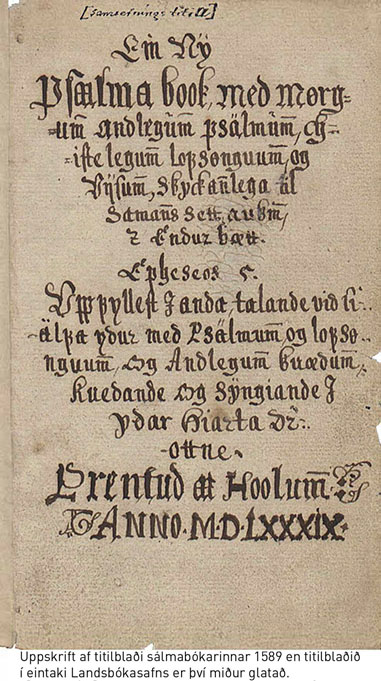
Changes in the Church after the Reformation required the congregation to sing hymns in its own language instead of the Latin chant of the Catholic Church, so there was an urgent need to translate the main hymns of the Lutheran Church into Icelandic. Ein ný sálmabók (A new hymnbook), published at Hólar in 1589, contained 343 hymns in all, 106 of them with music, and with it congregational singing in Icelandic became a reality.
The hymns in Ein ný sálmabók 1589 had a great influence on poetry and on the history of the Icelandic language, and played a large part in preserving Icelandic. The tunes they were sung to then shaped church singing for the next three hundred years and became an important part of Icelandic music history. Most of the tunes came from German and Danish hymnbooks, though changed to varying degrees by translation and adaptation to Icelandic verse forms; some came from the original Latin hymn, and the origin of a few is still unknown. Most of the tunes changed in many ways over the centuries and exist in many variants, but a few have been sung almost unchanged from generation to generation, and it is clear that some melodies live on in memory better than others.
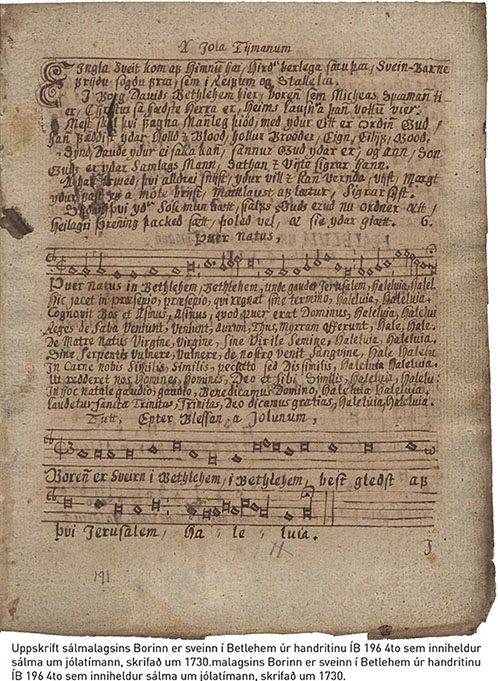
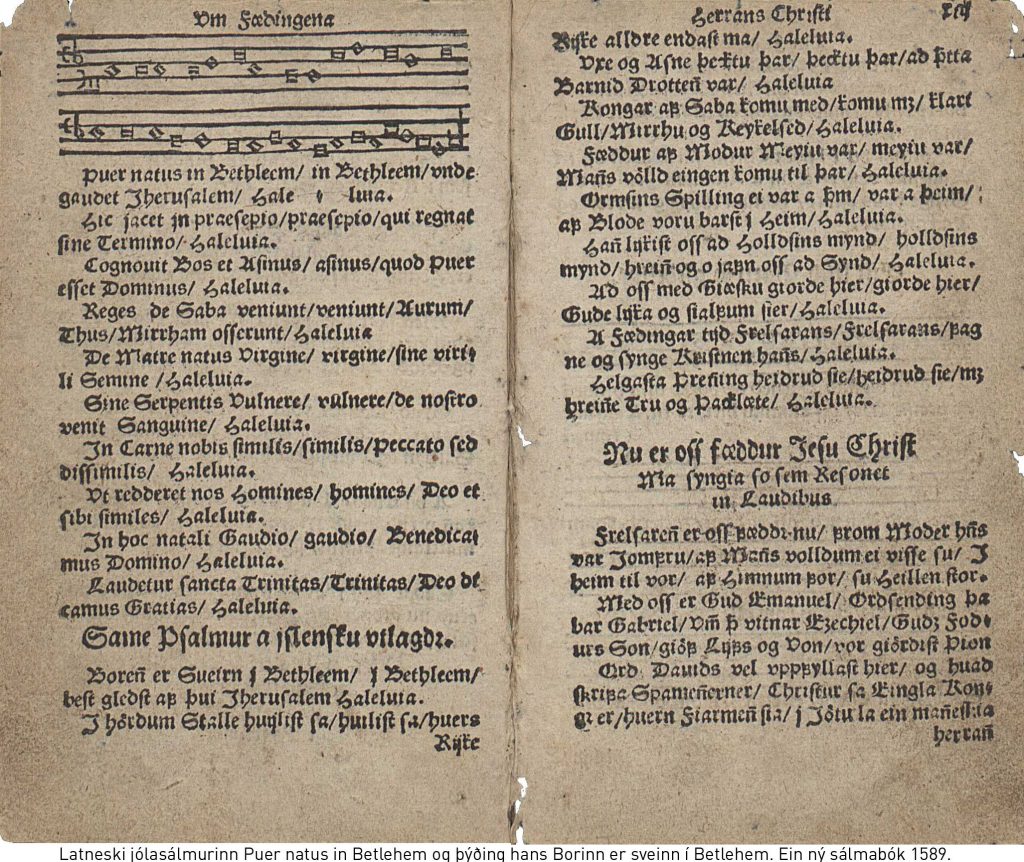
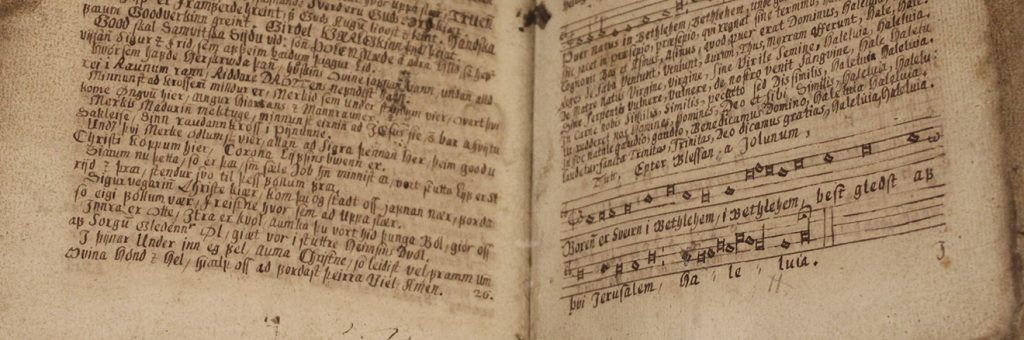
Among the Christmas hymns of 1589 is Borinn er sveinn í Betlehem, a translation of the Latin hymn Puer natus in Betlehem. The tune came from abroad and is still sung in its original form today, now to the Christmas hymn Oss barn er fætt í Betlehem, which is hymn no. 32 in the Sálmabók (Hymnbook) of 2022.
Ein ný sálmabók 1589 was printed in 375 copies. Only three copies are known, all incomplete. One copy is kept at the National and University Library of Iceland and is now on show, with some music manuscripts, in the exhibition “Sálmabækur 16. aldar” (16th-century hymnbooks) on the 1st floor of Þjóðarbókhlaða, the library building at Arngrímsgata 3.
Ein ný sálmabók is available on baekur.is