On 19 June it will be 95 years since King Christian X signed an act of Alþingi (the Icelandic parliament) giving Icelandic women the right to vote for Alþingi; men had had that right fairly generally since 1875. Icelandic members of parliament did, however, set the condition that women had to be forty or older to have the right, but women did not let that discourage them and celebrated their newly won right with a celebration on Austurvöllur on 7 July. One of the two women who spoke on Austurvöllur was Bríet Bjarnhéðinsdóttir.
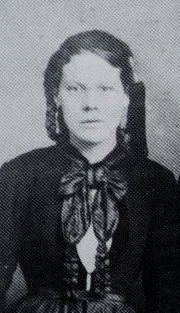
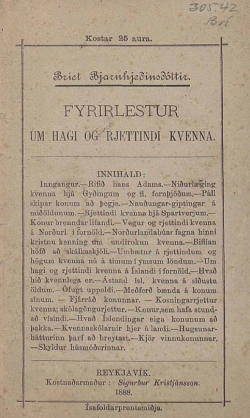
Bríet was born in 1856 at Haukagil in Vatnsdalur and died in Reykjavík in 1940. When she was born, women in Icelandic society not only had far fewer rights than men but had almost no choice other than to marry or to become servants in other people’s homes. By 1940, however, women had gained most legal rights on an equal footing with men, could attend every school and had various choices other than housekeeping or service. Bríet herself played a large part in this. She founded Kvennablaðið (the Women’s Paper) in 1895, in which she campaigned ever more strongly for women’s rights, took the initiative in founding the Icelandic Women’s Rights Association in 1907, and in 1908 became one of four women on Reykjavík Town Council, all of them elected from a separate women’s list that Bríet had initiated. You can read about Bríet’s life and many activities, and about Icelandic women’s struggle for the vote, on special websites of the Women’s History Archives (www.kvennasogusafn.is), but it can be said that the struggle of Bríet and Icelandic women for women’s rights began with the lecture she gave in Reykjavík on 30 December 1888, entitled Fyrirlestur um hagi og rjettindi kvenna (A lecture on the condition and rights of women), published by Sigurður Kristjánsson at Ísafoldarprentsmiðja and called “the first lecture by a woman in Iceland” on its title page. Bríet discussed what she knew best: the upbringing, lack of education and pay of women servants, and she said that attitudes needed to change.
Click the picture to download a PDF (10.5 MB):