In the wake of the Great Depression of the 1930s there was high unemployment in the West. Millions were out of work and poverty was severe. Governments in many places took action to create jobs, with the President of the United States, Franklin D. Roosevelt, leading the way. He introduced a new economic policy, the New Deal (“nýja sátt” in Icelandic), consisting of large public works and social reforms that guaranteed people a minimum wage and the right to social assistance.
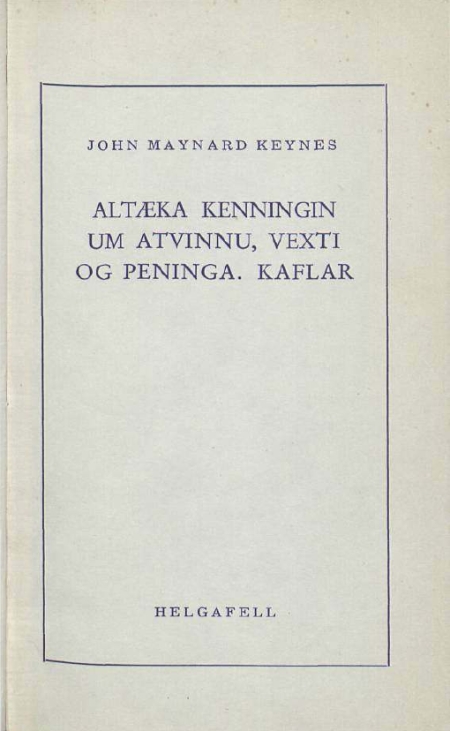
Within economics there were fierce disputes about the causes of the depression and how to solve it. In 1936 a book was published that brought a turning point in modern economics and in ideas of how the crises of capitalist states can be resolved. This was The General Theory of Employment, Interest and Money (Altæka kenningin um atvinnu, vexti og peninga in Icelandic) by the British economist John Maynard Keynes. The book was a critique of the orthodox economics that prevailed at the time. Keynes argued that the wheels of the economy could be set turning again by creating positive expectations among investors. He argued that positive expectations could be brought about by increasing general demand for goods in the economy, increasing public works, lowering interest rates and increasing the money supply. The book laid the foundation for the Keynesian economic policy that most Western governments followed in the second half of the 20th century.
In 1961 the economist Haraldur Jóhannsson translated the most important chapters of Keynes’s book and wrote an introduction to it. The book appears here as the Highlight of the month (click the picture to view the PDF file, which is 10.8 MB).